

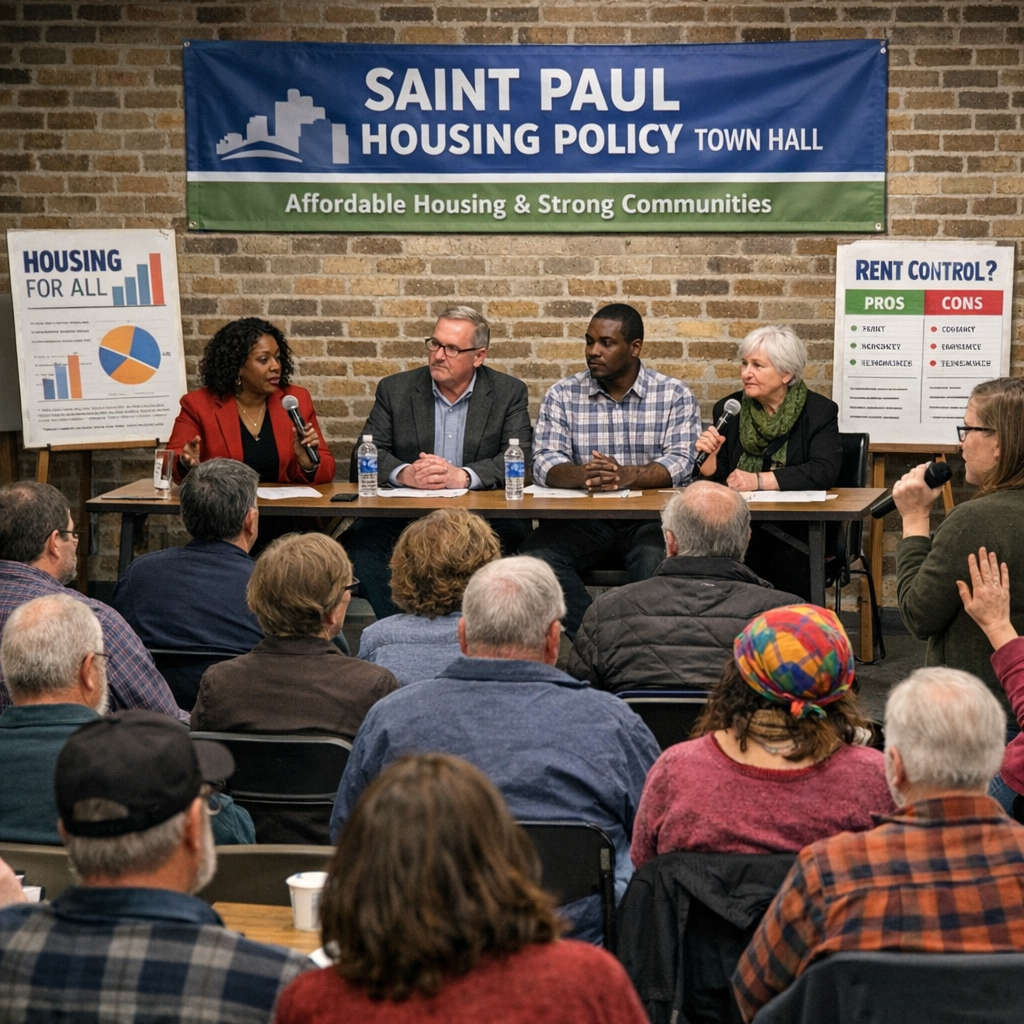
Saint Paul continues to confront significant housing challenges, including affordability and homelessness. The city’s 2040 Comprehensive Plan outlines a vision for inclusive growth, emphasizing the need for diverse housing options to accommodate its evolving population. This plan aims to create a community that is welcoming and offers opportunities for people of all incomes, ages, races, ethnicities, and abilities.
In response to these challenges, local advocates have initiated campaigns to empower renters. For instance, the ‘Safe Homes Saint Paul’ initiative seeks to introduce a ‘right-to-repair’ ordinance, granting tenants more authority to address unresolved maintenance issues in their residences. This movement reflects a broader commitment to enhancing tenant rights and ensuring safe living conditions.
Additionally, the city has implemented measures to protect residents from financial exploitation. The Saint Paul City Council passed an ordinance banning virtual currency kiosks, aiming to curb cryptocurrency scams that disproportionately affect low-income residents and older adults. This legislation underscores the city’s dedication to safeguarding its vulnerable populations from predatory practices.
Community organizations and local government continue to collaborate on strategies to expand affordable housing and support those experiencing homelessness. Efforts include adjusting zoning policies to allow more flexible housing types and launching coalitions like Heading Home Ramsey, which works to end unsheltered homelessness through coordinated outreach and services.
As Saint Paul navigates these complex issues, the collective efforts of residents, advocates, and policymakers remain crucial in building a more equitable and inclusive community.